
04 / TECHNOLOGY / INTERNAL ARCHITECTURE
ENGINEERED
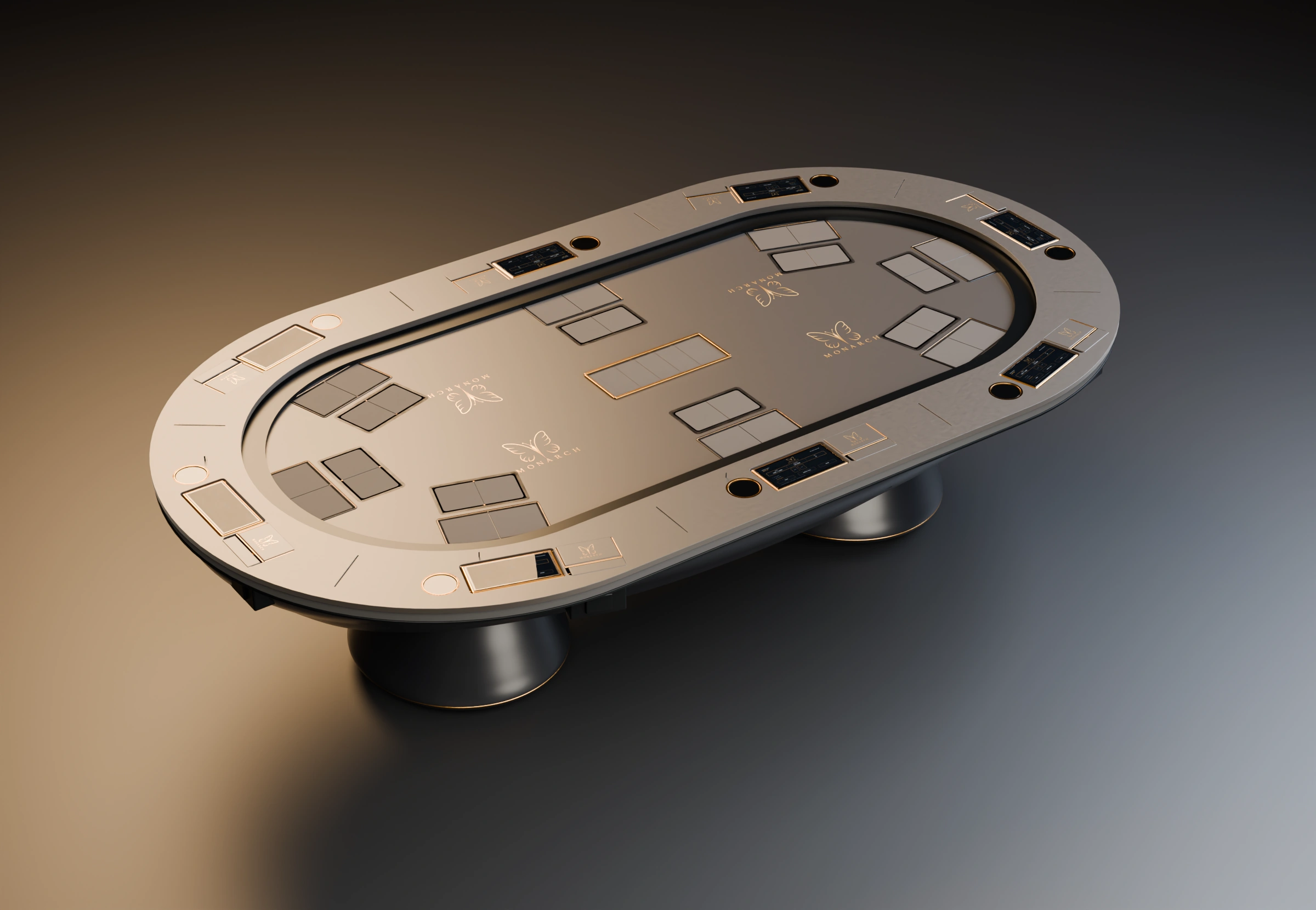
A first look inside the development-stage MONARCH system—from the physical card path to sensing, control and service access.Explore the architectureSYSTEM / ARCHITECTURE OVERVIEW
FIVE LAYERS.
ONE QUIET EXPERIENCE.
The objective is not to put a screen between players. It is to place the repetitive work beneath the playing surface.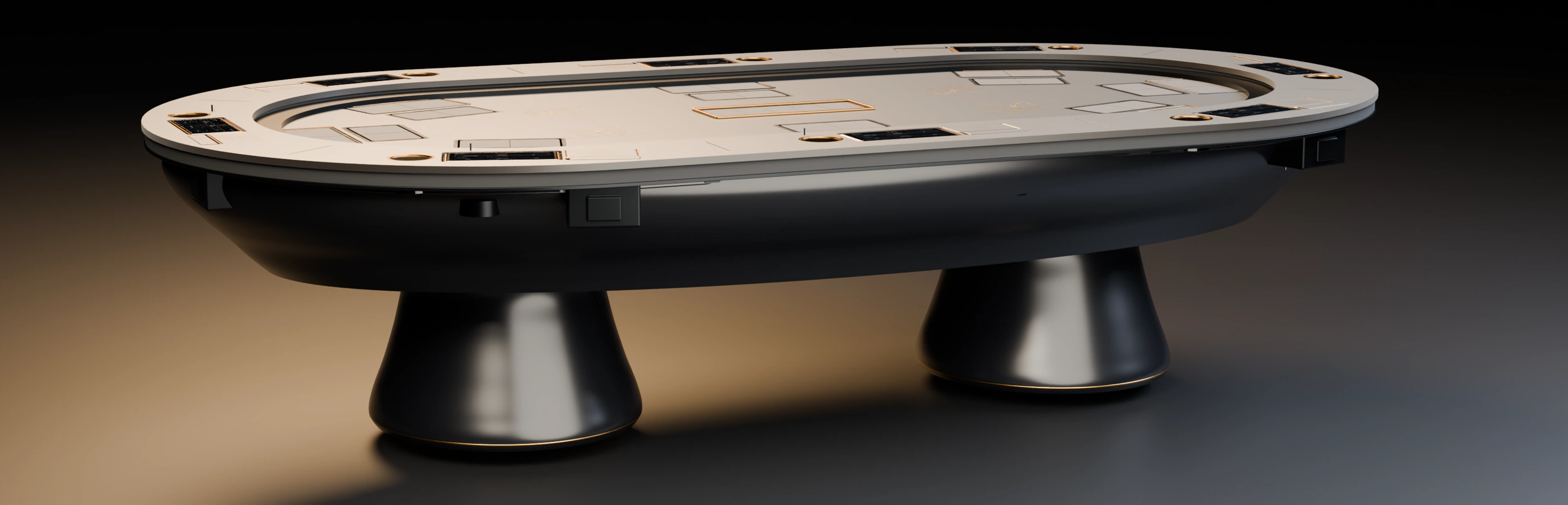
01Playing Surface
A configurable play field, individual player stations and the central community-card presentation form the visible interface.
02Distribution Layer
Card magazines, motorised feeds and protected transport channels route physical cards to each station.
03Recognition Layer
RFID antenna fields and optical sensing are conceived to identify chips, confirm card movement and follow the state of play.
04Control Layer
A central controller coordinates dealing, shuffling, chip handling, pot calculation and the information presented to players.
05Structure & Service
The internal frame, pedestal, power distribution, cable paths and access panels are arranged as serviceable modules.
MECHANICAL SYSTEMS
THE PATH OF
EVERY CARD.
Physical cards remain central. The proposed mechanism stores, feeds, senses and delivers them through enclosed paths to the player stations.
01 / CARD DISTRIBUTION
Magazine to player station
- 01Cards are held in a protected magazine.
- 02A motorised feed meters each physical card.
- 03Optical checks confirm movement through the transport channel.
- 04The card arrives at the designated player outlet.

02 / CHIP ELEVATOR
Physical value, mechanically presented
A guided platform and drive mechanism are conceived to move chips between the protected interior and the playing surface. Position sensing supports controlled movement and service diagnostics.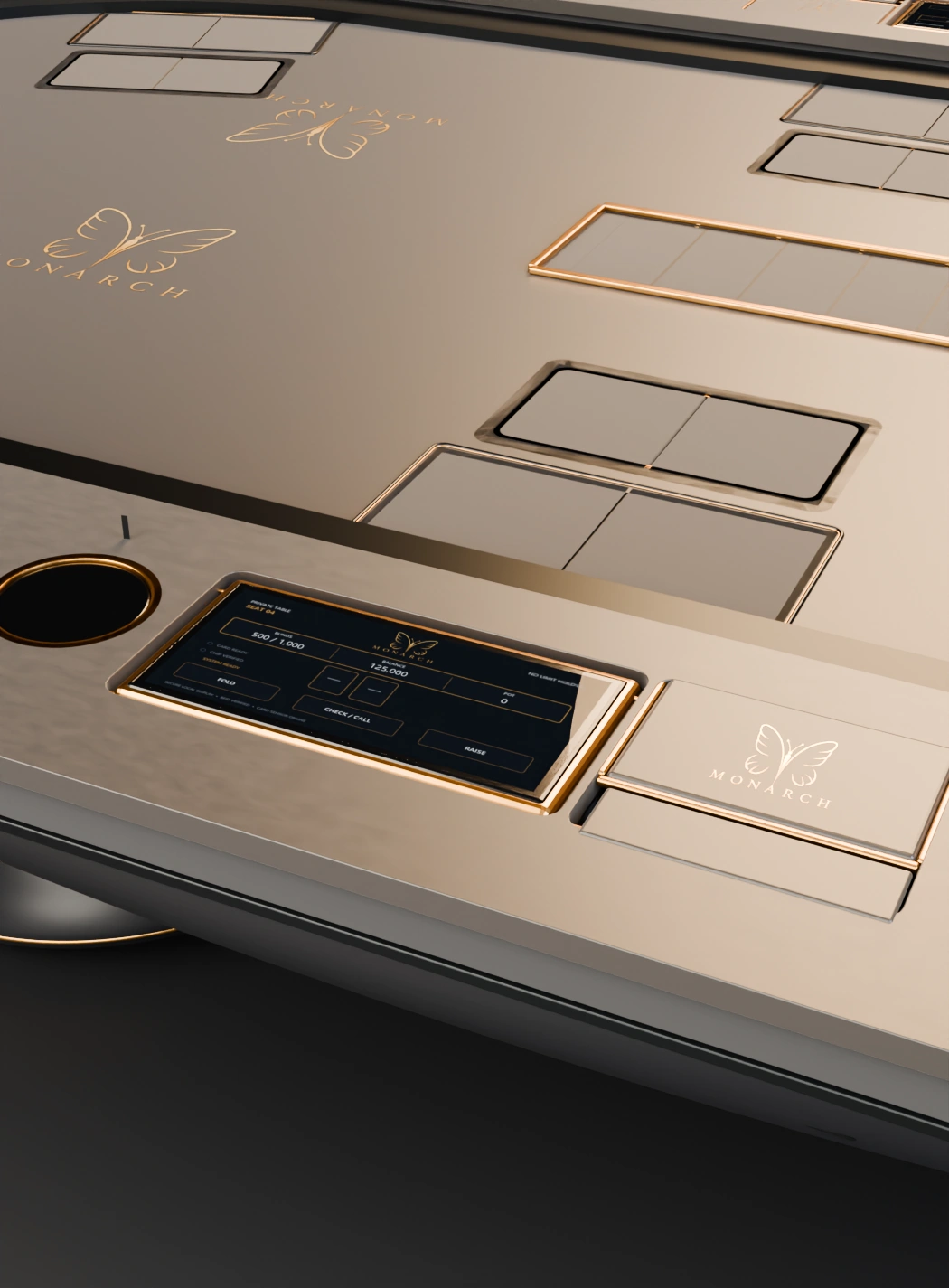
03 / COMMUNITY MODULE
Flop, turn and river—presented centrally
Five dedicated zones are arranged beneath a protective presentation surface. The module is intended to reveal community cards in sequence while retaining the presence of real cards.SENSING & CONTROL
ONE HAND.
ONE SYSTEM STATE.
Distributed sensing is conceived to report card movement and chip activity to a central controller, allowing the table to coordinate the hand and present relevant information.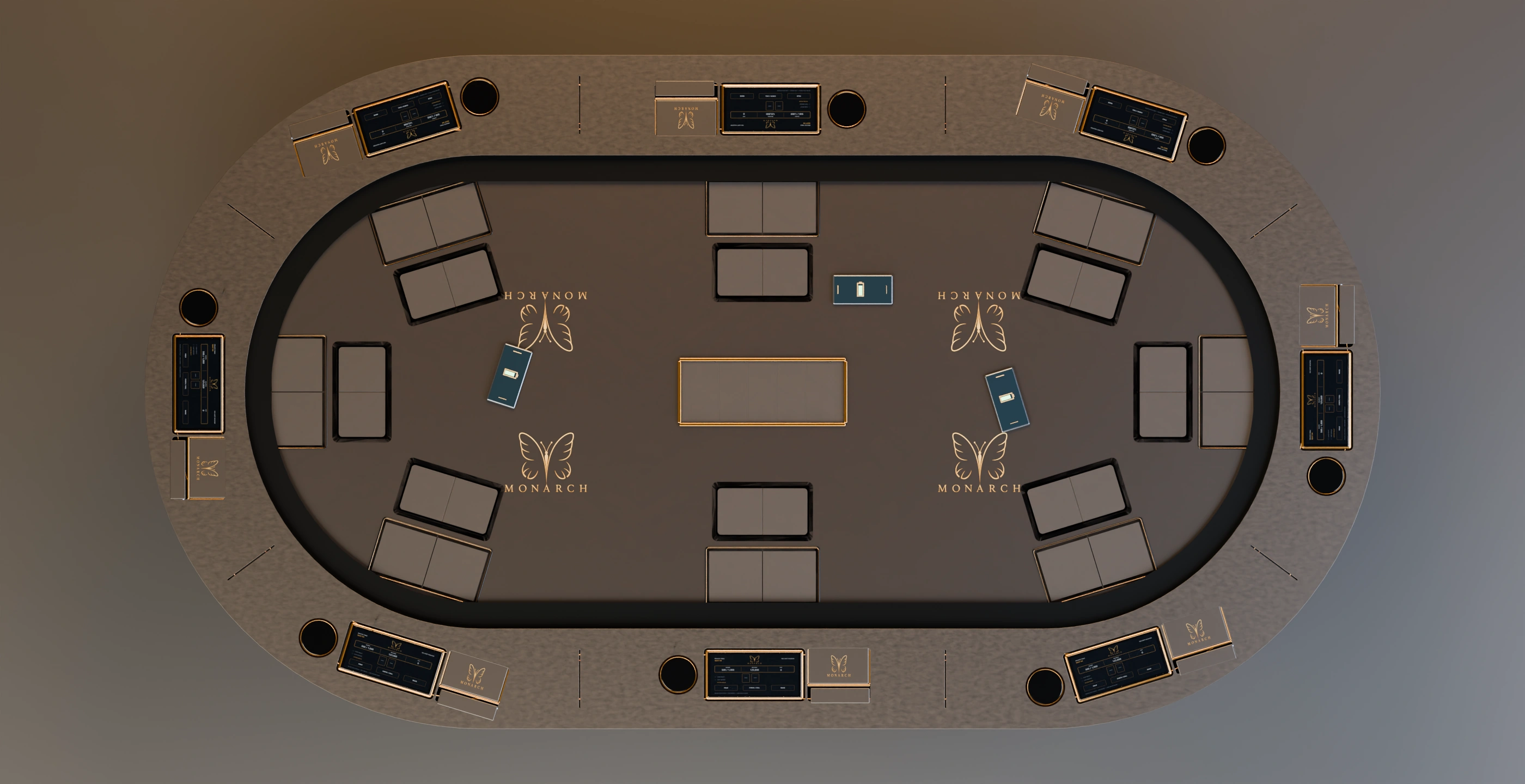
Catalogue image: playing-surface charging area. The sensing and control architecture is described below; it is not shown as an internal diagram.
Proposed player-zone coverage for physical chip recognition.
Movement confirmation along protected card paths.
Coordinated presentation of shared cards.
Game-state coordination, diagnostics and player information.
DEVELOPMENT STATUS
FROM CONCEPT
TO VALIDATED PRODUCT.
Before production release, the architecture requires detailed engineering, testing and certification.Discuss the architecture- 01Internal dimensions and mechanical tolerances
- 02Actuator sizing, duty cycles and lifecycle testing
- 03Thermal management and acoustic performance
- 04RFID performance and electromagnetic compatibility
- 05Electrical, mechanical and product safety certification
- 06Supplier selection and production engineering